Biggest Delonghi Dedica Duo Buying Mistakes (And How to Avoid Them)
The home espresso market has seen a dramatic shift over the last decade. As consumers move away from pod-based systems toward more authentic, semi-automatic brewing, manufacturers have had to balance the desire for professional results with the constraints of modern kitchen space. The Delonghi Dedica series has long stood at the center of this balance, offering a remarkably slim profile without sacrificing the mechanical integrity required for true espresso. The introduction of the Dedica Duo represents a significant evolution in this lineup, appealing to households that need to prepare multiple drinks efficiently. However, because this machine occupies a unique niche between entry-level appliance and prosumer equipment, many buyers fall into predictable traps. Making the wrong assumptions about its capabilities, its maintenance requirements, or its necessary accessories can lead to a frustrating morning routine. This guide examines the common pitfalls of purchasing the Delonghi Dedica Duo and provides actionable advice on how to integrate this machine into a successful home coffee setup.
Understanding the Dedica Duo Ecosystem
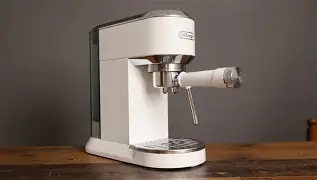
Before diving into specific buying mistakes, it is essential to analyze what the Delonghi Dedica Duo actually is. Unlike the standard Dedica (EC685 or EC885), which features a single boiler and a single steam wand, the Duo is built for throughput. It maintains the signature 6-inch width that made the original series famous but is designed to handle the thermal demands of back-to-back milk-based drinks more gracefully. It utilizes a Thermoblock heating system, which allows for rapid startup times—often under 40 seconds—making it one of the most agile machines on the market for the time-pressed professional.
The Dedica Duo is a pressurized portafilter machine by default. This is a critical distinction that many buyers overlook. A pressurized system uses a double-walled basket to artificially create the resistance needed to produce crema, allowing the user to use pre-ground coffee or a less-than-perfect grind. While this is a "pro" for beginners, it can be a "con" for those looking to transition into true specialty coffee. Understanding this mechanical baseline is the first step in avoiding the buyer’s remorse that stems from mismatched expectations.
Mistake 1: Underestimating the Importance of the Grinder
The most frequent mistake made by new owners of the Dedica Duo is spending their entire budget on the machine and relying on pre-ground supermarket coffee or a cheap blade grinder. Espresso is a game of resistance. The water is forced through a compressed puck of coffee at roughly 9 to 15 bars of pressure. If the coffee particles are inconsistent in size—which is what happens with blade grinders—the water will find the path of least resistance (channeling), resulting in coffee that is simultaneously sour and bitter.
Even though the Dedica Duo comes with pressurized baskets that "forgive" a coarse grind, the machine’s true potential is only unlocked when paired with a dedicated burr grinder. If you plan to eventually upgrade to unpressurized (single-wall) baskets to get that cafe-quality mouthfeel, a high-quality burr grinder is not optional; it is the most important part of the signal chain. Buying the Duo without a plan for a grinder is like buying a high-performance sports car and putting the lowest-grade fuel in the tank. You will get from point A to point B, but you will never experience what the machine is truly capable of.
Mistake 2: Ignoring the Learning Curve of the Steam Wand
The Dedica Duo often features an improved steam wand compared to the original entry-level models, but it still requires a specific technique. Many buyers assume that "Duo" means the machine can steam milk automatically like a super-automatic bean-to-cup machine. It cannot. This is a semi-automatic machine, meaning you are the barista. One of the biggest mistakes is failing to practice the "stretching" and "rolling" of milk. Users often simply submerge the wand and wait for the milk to get hot, resulting in "bath foam"—large, dry bubbles that separate from the liquid. To achieve the silky micro-foam necessary for latte art, one must learn to keep the tip of the wand just at the surface to introduce air (stretching) before submerging it slightly to create a vortex (rolling). If you are looking for a one-button latte, the Dedica Duo might lead to frustration rather than enjoyment.
Mistake 3: Miscalculating Kitchen Real Estate and Workflow
While the machine is slim, its "Duo" nature implies a specific workflow. A common mistake is not accounting for the total footprint including the accessories. You need space for the portafilter to swing, space to the side for the steam wand to operate, and space for a knockbox. Because the Dedica Duo is so light, it can sometimes slide on the counter when you are locking in the portafilter. Many buyers fail to realize they will need a rubber tamping mat or a high-friction surface to keep the machine stable during operation. Furthermore, the water tank is located at the rear. If you place the machine under low-hanging cabinets, you may find yourself having to slide the entire unit forward every time you need to refill the water, which quickly becomes a chore.
Find top-rated Electronics products at great prices.
Shop Amazon →Pros and Cons of the Delonghi Dedica Duo
- Pro: Ultra-Slim Profile - At approximately 15cm wide, it fits in kitchens where no other espresso machine could possibly reside.
- Pro: Rapid Heat-Up Time - The Thermoblock system is ready to brew in under a minute, unlike E61 group head machines that require 20-30 minutes.
- Pro: High Pressure (15 Bar) - Provides ample power to push through even finely ground coffee, ensuring a full extraction.
- Pro: User-Friendly Interface - Simple button layouts for single shots, double shots, and steam make it accessible for everyone in the household.
- Con: Lightweight Construction - Can require two hands to stabilize when inserting the portafilter to prevent the machine from tipping or sliding.
- Con: Pressurized Baskets as Standard - While great for beginners, these limit the ceiling for "god-shot" espresso quality unless replaced with aftermarket parts.
- Con: Thermoblock Temperature Stability - While fast, Thermoblocks can fluctuate in temperature more than heavy brass boilers during long extraction cycles.
Mistake 4: Failure to Account for Water Quality
The Dedica Duo is a precision instrument with narrow internal plumbing. A massive mistake buyers make is using hard tap water without a filtration strategy. Scale (calcium buildup) is the number one killer of home espresso machines. It clogs the narrow channels of the Thermoblock, reduces steam pressure, and eventually causes the pump to fail. Many buyers wait until the "descale" light flashes to think about water, but by then, some damage may already be done. Avoiding this mistake involves using filtered water or a dedicated water softening pouch in the reservoir. Buyers in hard-water areas should be particularly vigilant; simply relying on the machine’s internal descaling cycle is often not enough to preserve the flavor profile of the coffee over several years.
Feature Comparison: Dedica Duo vs. Competitors
| Feature | Delonghi Dedica Duo | Standard Entry-Level Semi-Auto | Compact Pod Machine |
|---|---|---|---|
| Width | ~15 cm | ~25-30 cm | ~10-12 cm |
| Heating System | Thermoblock | Single Boiler | Thermoblock |
| Portafilter Size | 51 mm | 58 mm (Standard) | N/A (Pod) |
| Control | Programmable Volumetric | Manual or Timed | Fixed Volume |
| Milk Steaming | Manual Wand | Manual Wand | N/A (or separate frother) |
Mistake 5: Not Customizing the "Out of the Box" Experience
Many owners treat the Dedica Duo as a "set it and forget it" appliance. However, one of the greatest mistakes is not realizing how customizable the machine is. The default settings for water temperature and auto-shutoff can be adjusted via the button combinations detailed in the manual. Furthermore, the Dedica series has a massive enthusiast community. A major mistake is not investigating minor "quality of life" upgrades that can be purchased later. These include:
- A Bottomless Portafilter: This allows you to see the extraction as it happens, helping you diagnose channeling and improve your ta…
Step 1: Assess Your Coffee Style
Do you drink mostly straight espresso, or are you a latte/cappuccino enthusiast? If you drink straight espresso and are very picky about flavor notes, you may find the Dedica Duo's 51mm basket limiting over time. If you drink milk-based beverages, the Duo is excellent because the milk masks the minor inconsistencies inherent in small-format espresso machines. Understanding this will help you decide if the Duo is your "forever" machine or a "stepping stone" machine.
Step 2: Budget for the "Shadow Costs"
The price of the machine is just the entry fee. To get the results you see in advertisements, you must budget for a burr grinder, a decent tamper, a milk frothing pitcher, and cleaning supplies (descaler and backflow cleaning tablets). If the Dedica Duo stretches your budget to its limit, it is better to wait and save up so you can buy the machine and a grinder at the same time.
Step 3: Evaluate Your Routine
The Dedica Duo is designed for speed. If you are a "one cup and out the door" person, the fast Thermoblock heat-up is your biggest asset. If you frequently host large dinner parties and need to make six lattes in a row, you may find the small water reservoir and the need to purge the steam wand between drinks to be a bottleneck. The "Duo" name implies better handling of multiple drinks than the single-model, but it is still a domestic machine, not a commercial one.
Shop the latest Electronics picks on Amazon.
See Deals →Step 4: Check for Regional Variations
The Dedica Duo can vary slightly in its accessory kit depending on the region and the specific SKU. Some versions include a better steam wand (the MyLatteArt wand), while others include the traditional Panarello (the plastic sleeve). The MyLatteArt wand is vastly superior for those who want to learn latte art, as it allows for much finer control over air injection. Always verify which wand is included with the specific model number you are viewing.
Advanced Techniques to Improve Your Results
Once the machine is on your counter, avoiding "user errors" is just as important as avoiding "buying mistakes." One advanced tip for Dedica Duo owners is the "temperature surfing" technique. Because Thermoblocks can lose heat quickly, running a "blank shot" (water only) through the portafilter before adding coffee helps to heat up the group head and the portafilter metal. This ensures that when the water hits the coffee grounds, it doesn't lose ten degrees of heat to the cold metal components, which would lead to under-extraction.
Another technique is the "pre-infusion" hack. The Dedica Duo has a built-in pre-infusion, but manually starting the shot, stopping it after two seconds, and waiting five seconds before starting it again can sometimes help saturate the puck more evenly, leading to a richer flavor profile. These are the kinds of small adjustments that separate a "machine owner" from a "home barista."
The Maintenance Trap
A final mistake to avoid is neglecting the group head gasket and the shower screen. Because espresso is brewed under such high pressure, small amounts of coffee oils and fine grounds eventually migrate upwards into the internal screen. If no maintenance is performed, these oils turn rancid, and every subsequent shot will have a "burnt" or "stale" aftertaste, regardless of how fresh your beans are. Every few weeks, it is worth unscrewing the shower screen (if the warranty and design allow for your specific model) or at least running a cleaning cycle with a dedicated espresso machine detergent. This simple act of hygiene can extend the life of the machine by years.
Conclusion
The Delonghi Dedica Duo remains a standout choice for the urban coffee lover who refuses to compromise on kitchen space. It is a machine that bridges the gap between the simplicity of a kitchen appliance and the complexity of a professional espresso machine. Buying mistakes usually stem from a lack of respect for the espresso process itself—assuming the machine can do everything without the help of a good grinder, quality water, and a bit of technique. By avoiding the pitfalls of ignoring water quality, under-budgeting for accessories, and failing to practice manual milk steaming, owners can find in the Dedica Duo a reliable, fast, and stylish companion for their morning ritual. It is a machine that rewards those who take the time to understand its quirks, delivering cafe-quality results in a footprint that is virtually unbeatable in the current market. Whether you are a beginner looking to pull your first real shot or a seasoned enthusiast needing a compact secondary machine, the Dedica Duo is a powerhouse, provided you approach the purchase with eyes wide open to the realities of the espresso craft.