Biggest Imageclass Mf445Dw Buying Mistakes (And How to Avoid Them)
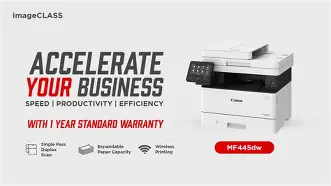
The Canon ImageCLASS MF445dw is a popular monochrome multifunction laser printer aimed at small offices and work-from-home setups. It promises reliable black-and-white printing, scanning, copying and basic network features in a compact package. However, buyers frequently make avoidable mistakes when evaluating this class of device — focusing on headline specs and price alone can lead to higher running costs, workflow friction, or disappointing performance after purchase. This article examines the most common purchasing errors related to the ImageCLASS MF445dw, provides a detailed analysis of the product’s strengths and limitations, and offers a practical buying guide to match the device to real-world use cases.
Introduction: Why buying a printer needs more than price and page-per-minute claims
Printers are rarely one-off purchases: they are long-term devices that involve consumables, maintenance, network integration and daily use patterns. For many businesses and prosumers, the true cost and impact of a printer appear only after months of use. When considering an ImageCLASS MF445dw, buyers should look beyond the sticker price and the manufacturer’s speed claims. Instead, an effective evaluation considers monthly volume, toner yield and cost, paper handling, network/security requirements, and the specific scanning or finishing features required by the workflow.
Detailed product analysis: What the ImageCLASS MF445dw offers and where it fits
The ImageCLASS MF445dw sits in the category of compact monochrome multifunction printers (MFPs). It targets small teams and home offices that primarily need dependable black-and-white output and basic multi-function capability.
Core strengths
- Reliable monochrome output: Laser technology and Canon’s print engine deliver sharp black text and solid graphics for office documents, invoices, and forms.
- Multifunction convenience: Built-in scanning and copying reduce the need for separate devices, centralizing document workflows.
- Networked connectivity: Support for wired Ethernet and wireless networking enables shared use in small teams and compatibility with common mobile printing standards.
- Compact footprint: Designed to fit on a shelf or small office counter, making it appropriate where space is limited.
Practical limitations
- Monochrome-only: No color printing; that is perfect for text-heavy environments but unsuitable when occasional color graphics or marketing material are required.
- Consumables and running cost: Toner cost and yields significantly influence the total cost of ownership — an area often underestimated by buyers.
- Advanced finishing: Stapling, hole-punching and other advanced finishing are typically absent from compact models, which can be a drawback for departments that rely on finished booklets or stapled packets.
- High-volume limits: While robust for small offices, sustained heavy usage at enterprise scale will push the MF445dw past its design limits; duty cycle and preventative maintenance must be considered.
Common buying mistakes and how to avoid them
Mistake 1: Choosing based on headline speed alone
Many buyers equate the "pages per minute" number with productivity. In reality, small differences in ppm rarely affect day-to-day work for most small teams. What matters more is first-page-out time (how quickly the first page prints), warm-up behavior, and the time the device spends managing complex print jobs. For multi-user environments, consider how queues are managed and whether the device supports secure printing or user authentication to avoid wasted prints.
Mistake 2: Ignoring total cost of ownership (TCO)
Initial unit cost is only part of the equation. Toner yield, the price of replacement cartridges (including high-yield options), and maintenance kits can outstrip the purchase price over time. Buyers should calculate cost-per-page using realistic monthly volume figures and compare genuine manufacturer cartridges against compatible third-party options — but also factor in reliability and warranty implications.
Mistake 3: Overlooking paper handling and capacity
A common frustration is buying a printer with insufficient input trays or capacity for the typical workload. If a small office prints many multi-page packets or uses a variety of media (envelopes, labels, cardstock), verify tray capacities, supported paper sizes and whether there is a multipurpose tray for specialty media. Otherwise, frequent paper reloads and manual feeds will erode productivity.
Mistake 4: Not verifying scan workflow and OCR needs
Scanning features are as important as printing for many buyers. The presence of an automatic document feeder (ADF), duplex scanning, scan to searchable PDF (OCR), and integration with cloud storage or network folders determines how well the MFP fits into digitization workflows. Confirm the supported scan destinations and whether bundled software provides the necessary OCR and document routing capabilities.
Mistake 5: Assuming compatibility without testing
Drivers, mobile printing standards, and network configurations can introduce compatibility issues. Confirm that the MF445dw supports the operating systems and mobile ecosystems used in the environment (for example, macOS, Windows, Linux, iOS AirPrint, Android Mopria). Where possible, request a trial or demo to validate driver behavior and mobile printing from smartphones and tablets.
Looking for the best Electronics deals on Amazon?
Shop Amazon →Mistake 6: Ignoring security features for networked devices
A networked MFP can become an attack surface. Buyers often miss features like secure boot, firmware update mechanisms, user authentication, IP filtering, and encrypted transmission for scanned documents. For offices that handle sensitive data, these security features should be assessed as a priority.
Mistake 7: Failing to check the service and warranty options
Extended warranties, onsite service, and availability of replacement parts influence longer-term reliability. Small businesses sometimes buy a low-cost unit only to face extended downtime because local service options are limited. Check service coverage and estimated turnaround for repair and parts replacement.
Comparison: ImageCLASS MF445dw vs. similar compact monochrome MFPs
| Feature | ImageCLASS MF445dw | Typical Small-Office Monochrome MFP | Alternative Entry MFP |
|---|---|---|---|
| Intended use | Small office, home office, single-department use | Small to medium teams with moderate volume | Home office or mobile worker where space is premium |
| Color | Monochrome | Monochrome | Monochrome / occasional color variants |
| Multifunction | Print/Copy/Scan (and basic fax support in some configurations) | Print/Copy/Scan/ADF duplex scanning | Print/Copy/Scan with smaller ADF |
| Connectivity | Wired Ethernet, Wireless LAN, mobile print standards | Similar — may add USB host or NFC | Wireless and USB, sometimes no Ethernet |
| Paper handling | Standard input tray + multipurpose feeder; expandable options | Larger base trays or optional additional trays | Minimal capacity, intended for low-volume users |
| Best fit | Users who need reliable text printing and basic scanning | Offices needing higher capacity or finishing features | Users with space constraints and very light volume |
Pros & Cons
Pros
- Efficient black-and-white printing: Suitable for high-clarity text and standard office documents.
- Space-conscious design: Compact footprint for constrained workspaces.
- Integrated scanning: Scanning and copying reduce dependence on separate devices.
- Network-ready: Offers wired and wireless connectivity for shared use.
- Simple administration: Straightforward controls and configuration for small IT teams.
Cons
- No color output: Limits flexibility for marketing collateral, photos, or color-coded materials.
- Consumables drive cost: Toner and replacement parts represent ongoing expenses that must be budgeted.
- Limited finishing: No advanced stapling or booklet-making built in for higher-end office tasks.
- Potentially limited advanced scanning: OCR accuracy and bundled software capabilities vary and should be evaluated against workflow needs.
Buying guide: How to match the MF445dw to real-world use cases
Below are practical considerations to decide whether the ImageCLASS MF445dw is a good fit and how to avoid common pitfalls.
1. Define monthly print volume and duty cycle needs
Estimate the average and peak monthly pages. If the environment produces a few hundred to a few tho…2. Calculate total cost of ownership (TCO)
Request or research toner yield figures for both standard and high-yield cartridges. Estimate cost-per-page and multiply by projected monthly pages to get an annual consumables cost. Add expected maintenance parts and service fees to compare the long-term expense of different models.
3. Assess scanning and document workflow needs
Determine whether scanning to searchable PDFs (OCR), scan-to-email, or direct scanning to network folders/cloud storage is required. Validate whether bundled software provides the necessary features and whether it is compatible with existing document management systems. For heavy scanning needs, prioritize duplex ADF, high-speed scanning, and robust OCR.
4. Verify network, security and mobile printing support
For shared or remote teams, confirm support for secure printing, user authentication, TLS/SSL for network services, and firmware update procedures. If mobile printing is important, check for AirPrint, Mopria, and Canon’s own mobile utilities.
Discover deals on Electronics — updated daily.
Shop Amazon →5. Check paper handling and media compatibility
Confirm input tray capacities and whether the device supports the media sizes and weights used (envelopes, labels, cardstock). For frequent multi-page print jobs, a larger input capacity reduces interruptions.
6. Evaluate physical space, noise and energy use
Measure the footprint and plan for ventilation and access. Consider noise output if the printer will sit near desks or in open-plan offices. Energy-saving features such as automatic sleep modes will reduce operating costs over time.
7. Plan for service and consumables logistics
Check local availability of genuine toner, response times for service calls, and the existence of extended warranty or onsite support options. For remote or distributed teams, evaluate whether remote management tools or fleet management services are available.
8. Try before committing
If possible, test the device with a sample of real print and scan jobs that mirror the expected workload. That trial will highlight driver idiosyncrasies, scanning accuracy, and real-world speed for mixed-content documents.
Real-world use cases and buyer priorities
Different buyers prioritize different features:
- Home office / solo professional: Prioritizes compact size, low noise, easy mobile printing and reasonable per-page costs. A device like the MF445dw appeals for dependable monochrome printing without large footprint.
- Small business / multi-user office: Looks for network reliability, moderate duty cycle, ADF duplex scanning and manageable consumable costs. Security and user authentication may also be priorities for handling invoices and client information.
- School or nonprofit: Emphasizes low cost-per-page, robust paper handling for handouts, and simple maintenance. Volume peaks around certain events (enrollment, exams) so capacity planning is necessary.
- Remote worker in hybrid teams: Needs compatibility with cloud services and mobile printing, as well as a compact design that fits a home workspace.
Checklist before purchasing
- Confirm expected monthly volume and verify duty cycle suitability.
- Calculate cost-per-page using toner yield and replacement costs for standard and high-yield cartridges.
- Verify supported OS, mobile printing standards and driver availability.
- Test scanning features, OCR accuracy and destination options for the intended workflow.
- Check paper tray sizes, multipurpose feeder capabilities and supported media weights.
- Review security features relevant to the environment (encryption, authentication, firmware updates).
- Investigate warranty, service response times and local consumable availability.
Conclusion
Purchasing the Canon ImageCLASS MF445dw — or any compact monochrome multifunction printer — requires balancing initial cost, ongoing consumable expenses, and how well the device integrates into daily workflows. The most frequent mistakes happen when buyers overemphasize headline metrics like price and pages-per-minute while underestimating toner costs, scan workflow requirements, paper handling and security. By defining real-world needs up front, calculating total cost of ownership, testing key features where possible, and verifying service options, buyers can avoid common pitfalls and select a device that delivers reliable performance for years. The ImageCLASS MF445dw can be an excellent fit for text-centric small offices and home professionals when these considerations are addressed thoughtfully.