Don't Buy the G3 Oled Until You Read This Full Analysis
Introduction
The landscape of premium home cinema has undergone a seismic shift over the last decade, transitioning from the era of high-contrast plasmas to the peak of organic light-emitting diode (OLED) technology. For years, the primary criticism leveled against OLED panels was their lack of peak brightness when compared to high-end LED-LCD televisions. While OLEDs offered perfect blacks and infinite contrast, they often struggled in sun-drenched living rooms. The G3 OLED represents a pivotal moment in this technological evolution, specifically designed to bridge that brightness gap through the introduction of Micro Lens Array (MLA) technology. However, when an appliance carries a premium "Gallery" series price tag, the stakes for the consumer are significantly higher. This analysis explores whether the G3 is a revolutionary leap forward or an incremental refinement that might not justify the investment for every type of viewer.
In the current market, buyers are often caught between two competing philosophies: the visual purism of self-emissive pixels and the raw luminance of Mini-LED systems. The G3 aims to offer the best of both worlds. But before committing to a purchase that could cost several thousand dollars, it is essential to understand the nuances of its performance, the specific installation requirements of its design, and how it handles different types of media—from low-bitrate cable broadcasts to the latest 4K HDR gaming titles. This article provides a comprehensive deep dive into the hardware, software, and real-world utility of the G3, ensuring that potential owners can make a decision based on data rather than marketing buzz.
The Technological Core: Understanding MLA
To understand the G3, one must first understand Micro Lens Array (MLA) technology. Historically, OLED panels lost a significant portion of the light they generated due to internal reflections within the panel structure. LG Display’s solution, integrated into the G3, involves a layer of billions of microscopic lenses—roughly 5,000 per pixel—that are placed over the OLED material. These lenses redirect light that would otherwise be lost back toward the viewer. The result is a dramatic increase in peak and sustained brightness without necessarily driving the organic material harder, which is crucial for maintaining the longevity of the panel and mitigating the risk of permanent image retention, commonly known as burn-in.
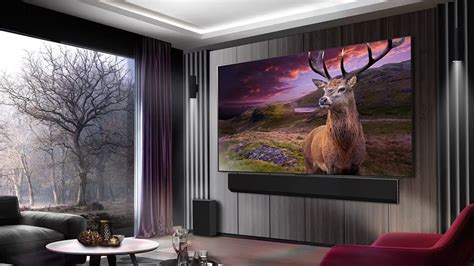
In practice, this allows the G3 to hit brightness levels that were previously unthinkable for OLED technology. While standard OLEDs typically peak between 600 and 800 nits, the G3 can exceed 1,400 nits in certain high-dynamic range (HDR) scenarios. This isn't just about making the image "brighter" in a general sense; it’s about expanding the dynamic range. It allows for spectacular specular highlights—the glint of sun off a chrome bumper or the intense glow of a lightsaber—to stand out against dark backgrounds with a level of intensity that adds a new layer of realism to the viewing experience.
Design and Build Quality: The Gallery Concept
The "G" in G3 stands for Gallery, and this designation dictates the physical form of the television. Unlike standard OLED models that feature a "bump" at the bottom to house internal components, the G3 is uniform in thickness—approximately one inch deep across the entire chassis. It is designed to be mounted flush against the wall, mimicking a piece of framed art. LG includes a specialized "Zero Gap" wall mount in the box, which allows the TV to sit entirely flat against the drywall.
However, this design choice brings a significant caveat for many buyers: the G3 does not include a traditional table-top stand in the box. If you intend to place this TV on a media console or credenza, you must purchase a separate stand, which usually features a slight backward tilt. This design reinforces the idea that the G3 is a premium architectural product intended for dedicated installations. For those who prefer the flexibility of moving their TV between different rooms or setups, the G-series design might feel more like a restriction than a luxury feature.
Performance Analysis: Real-World Use Cases
Tuned by the Alpha 9 Gen 6 AI Processor, the G3 handles image processing with a sophisticated touch. Beyond the raw hardware power of the MLA panel, the software performs "AI Super Upscaling," which is particularly relevant for users who still consume 720p or 1080i content from cable or older streaming services. The processor identifies faces and objects, applying specific sharpening and noise reduction algorithms to make lower-resolution content look remarkably close to native 4K.
Shop the latest TVs & Home Theater picks on Amazon.
Browse Now →Cinema and HDR Performance
For the cinephile, the G3 supports Dolby Vision, HDR10, and HLG. The presence of MLA makes the Dolby Vision experience particularly transformative. Movies like Dune or Blade Runner 2049 benefit immensely from the increased light output. In scenes where intense light sources pierce through shadows, the G3 maintains incredible shadow detail without the "crushing" effect seen on lesser panels. Colors are vibrant yet accurate, thanks to the TV’s wide color gamut coverage, which tracks nearly the entire DCI-P3 space. The Filmmaker Mode remains the gold standard for those who want to see the movie exactly as the director intended, stripping away motion smoothing and artificial sharpening to provide a pure cinematic output.
Gaming: A High-Performance Monitor
LG has consistently led the market in gaming features for televisions, and the G3 is no exception. It features four full-bandwidth HDMI 2.1 ports, supporting 4K resolution at 120Hz (and even up to 144Hz for PC players). It is compatible with NVIDIA G-Sync, AMD FreeSync Premium, and VRR (Variable Refresh Rate). The inclusion of the "Game Optimizer" dashboard allows players to toggle settings on the fly, such as black stabilizer to see enemies in the dark or low latency modes to minimize input lag. The input lag on the G3 is measured in the single digits (milliseconds), making it as responsive as many dedicated gaming monitors but on a much grander scale.
The Bright Living Room Scenario
One of the most significant real-world tests for any TV is performance in a room with windows. Standard OLEDs often act like "black mirrors" during the day, reflecting lamps and sunlight. The G3 addresses this with a new Vanta Black-inspired coating that significantly reduces reflections compared to its predecessors. Coupled with the massive jump in brightness from the MLA tech, the G3 is the first OLED that can competently compete with high-end QLED (Quantum Dot LED) TVs in brightly lit environments. You no longer have to wait until sunset to enjoy the deep contrast of an OLED.
Detailed Comparison: G3 vs. Industry Standards
To provide a clear context of where the G3 sits in the current market, it is helpful to look at how its…| Feature | Standard OLED (B/C Series) | G3 OLED (MLA) | High-End Mini-LED |
|---|---|---|---|
| Peak Brightness (Nits) | 600 - 800 | 1,400 - 1,500 | 2,000+ |
| Black Levels | Perfect (Individual Pixel Off) | Perfect (Individual Pixel Off) | Near-Perfect (Zone Dimming) |
| Reflection Handling | High (Glossy) | Excellent (Specialized Coating) | Variable (Often Good) |
| Form Factor | Standard Slim | Ultra-Slim / Flush Mount | Thicker (Backlight Required) |
| HDMI 2.1 Ports | Standard 2 or 4 | 4 Full-Bandwidth Ports | Variable (Usually 2 or 4) |
Pros and Cons
Every piece of technology involves trade-offs. While the G3 is a flagship device, it serves a specific niche. Below is a breakdown of the advantages and disadvantages encountered during thorough analysis.
- Unmatched Brightness for OLED: The MLA technology successfully overcomes the "dimness" stigma of traditional OLED panels, making HDR content pop with realistic intensity.
- Architectural Aesthetic: The flush-to-wall mounting system is arguably the most elegant TV installation currently available, perfect for modern minimalist interiors.
- Elite Gaming Support: With four HDMI 2.1 ports and comprehensive VRR support, it is effectively future-proof for the current and next generation of gaming consoles.
- Industry-Leading Processing: The Alpha 9 Gen 6 AI processor handles motion and upscaling with fewer artifacts than most competitors.
- Superb Viewing Angles: Because it is a self-emissive display, the picture doesn't lose color or contrast when viewed from the side, unlike many LCD-based screens.
- No Table Stand Included: The decision to exclude a stand can be a major inconvenience and an extra expense for buyers who aren't ready to drill into their walls.
- Price Premium: The cost gap between the G3 and the mid-tier C3 is significant, often forcing buyers to weigh whether the 30% increase in brightness is worth the 50% increase in price.
- Audio Performance: While the built-in speakers are decent with virtual 9.1.2 up-mixing, a TV of this caliber almost demands a dedicated sound system or soundbar, which adds to the total cost of ownership.
- Heat Dissipation: The increased brightness and the thin chassis mean the back of the TV can get notably warm during extended HDR viewing sessions.
Buying Guide: Is the G3 Right for You?
Purchasing a TV at the level of the G3 is not a casual decision. It requires an assessment of your viewing habits, your physical space, and your long-term expectations for the hardware.
Consider Your Environment
If your primary viewing area is a dedicated home theater room with total light control (blackout curtains or a basement), the standard OLED models like the C-series might suffice. You will still get the perfect blacks and excellent color. However, if your TV is going to be the centerpiece of a living room with large windows or overhead lighting, the G3's MLA technology is a game-changer. It ensures the picture doesn't look washed out during the day.
Discover deals on TVs & Home Theater — updated daily.
Browse Now →The Installation Question
Are you willing to mount the TV? This is the most critical question for a G3 buyer. Because it is designed to be flush-mounted, using it on a stand can actually diminish its visual appeal, as it was not designed to be seen with wires hanging or on a bulky footprint. If you are a renter or someone who likes to rearrange furniture frequently, the G-series may be more trouble than it's worth. If you are a homeowner looking for a permanent, high-end installation, the G3 is the top choice.
Longevity and Burn-in Concerns
While MLA technology allows for higher brightness without stressing the pixels as much, no OLED is completely immune to burn-in. LG provides a five-year limited panel warranty with the G-series, which is a significant value add that the lower-tier models do not have. This suggests the manufacturer has high confidence in the thermal management and longevity of this specific panel. If you plan to keep your TV for five to seven years, this warranty alone might justify the higher entry price.
Content Selection
To truly see what the G3 can do, you need high-quality source material. If you spend 90% of your time watching standard-definition news or older sitcoms, you won't see the benefit of the MLA technology. This TV is designed for 4K Blu-rays, high-bitrate 4K streaming (like Apple TV+ or Disney+), and modern gaming. It is an enthusiast's tool for consuming high-fidelity media.
Conclusion
The G3 OLED is more than just another annual update in a long line of displays; it represents the arrival of "OLED 2.0." By integrating Micro Lens Array technology, LG has addressed the single biggest hurdle facing the format. The result is a display that retains the "perfect" characteristics of organic light-emitting diodes—infinite contrast and pixel-level control—while finally offering the high-nit performance required for a truly impactful HDR experience in various lighting conditions.
However, the G3 is not a universal recommendation. Its identity is inextricably linked to its "Gallery" design. For those who do not wish to wall-mount their TV, or for those who find the premium price tag too steep for a brightness bump that is only visible in certain scenes, the mid-tier alternatives remain highly competitive. But for the buyer who wants the absolute cutting edge of panel technology, a flush-mount aesthetic that looks like art, and the peace of mind offered by an extended panel warranty, the G3 stands as the current benchmark of excellence. It is a television that doesn't just display images; it presents them with a luminosity and depth that was, until very recently, thought to be impossible for this technology. If your budget and your wall are ready for it, the G3 offers one of the most compelling visual experiences on the market today.